Can You Really Run a Business Without Employees Using AI in 2025?
Introduction: The Question I Had to Test for Myself
A year ago, I asked a question that changed everything about how I think about business:
“Can a company actually run, without a single employee, using only AI systems?”
It sounded like a fantasy at first. Businesses need people, right? Strategy, sales, content, support, surely, there’s a human behind it all.
But in 2025, that assumption is starting to break.
I decided to test it myself. I stripped my operations down to just me, one founder, and built a system powered entirely by AI. No virtual assistants, no freelancers, no agencies.
The results?
It worked. Not perfectly, but far better than I ever imagined.
Here’s everything I learned about running a business with zero employees and an all-AI workforce.
Why I Decided to Replace My Team with AI
Like most entrepreneurs, I was tired.
Not from the creative work, but from the busywork.
Emails, invoicing, scheduling, content drafting, analytics, all the things that eat your day but don’t grow your vision.
I’d read countless posts about AI automating small tasks, but no one seemed to ask the bigger question:
“What if you didn’t just automate tasks, what if you automated your entire business?”
So, I decided to do what most people wouldn’t:
I let go of every human role in my business, and replaced it with artificial intelligence.
Setting Up: Designing a Business That Runs Itself
To build a company with no employees, I needed AI systems that could work together like a real team.
I broke my business down into roles and rebuilt them using AI:
| Business Role | AI Replacement | Function |
|---|---|---|
| Marketing | AI content & ad systems | Writing, posting, optimizing campaigns |
| Customer Service | AI chatbot | Answering questions, managing requests |
| Operations | Automation workflows | Managing tasks, reporting results |
| Design | AI image generators | Branding, social visuals |
| Finance | AI accounting assistant | Tracking income, expenses, and invoices |
Then, I used automation bridges (like Make and Zapier) to connect everything.
Each AI system could now “talk” to the others, handing off data, tasks, and updates automatically.
Within days, I had built something fascinating:
A business that ran itself.
Month 1: Chaos, Bugs, and Breakthroughs
Let me be honest, it didn’t work perfectly at first.
My AI content generator wrote a blog post that started with “Dear valued customers of Mars.”
My chatbot apologized for things that weren’t mistakes.
And one automation loop sent 100 duplicate emails to the same lead (ouch).
But here’s what I realized:
AI doesn’t fail because it’s dumb; it fails because it’s too literal.
Once I refined my prompts, corrected logic loops, and added guardrails (human review steps for key actions), the chaos turned into clarity.
By the end of the first month, the system wasn’t just working, it was improving.
The AIs began learning my preferences, adjusting tone, and auto-correcting mistakes faster than I could.
That’s when I knew: this wasn’t a fluke.
It was a blueprint for the future.
The Results: What Happened When I Stopped Hiring Humans
After three months of operating with zero employees, here’s what changed:
✅ 1. My Workload Dropped by 80%
Instead of working 10 hours a day, I spent 2–3 hours monitoring dashboards, reviewing content, and planning strategy.
✅ 2. Revenue Increased 40%
AI doesn’t sleep. It worked on lead generation, marketing, and customer support 24/7, no gaps, no delays.
✅ 3. Cost Efficiency Skyrocketed
My total operating cost fell below $400/month, less than 5% of what I used to pay for a small team.
✅ 4. Speed Became My Advantage
When new opportunities came up, I didn’t need to schedule meetings. I updated a prompt, and the system adapted instantly.
The outcome was simple but profound:
AI didn’t just make my business faster; it made it fluid.
What AI Does Better Than Humans
Through this experiment, I discovered three areas where AI absolutely dominates human performance:
1. Consistency
AI never forgets, never gets distracted, and never gets tired.
Every customer gets the same level of service, every time.
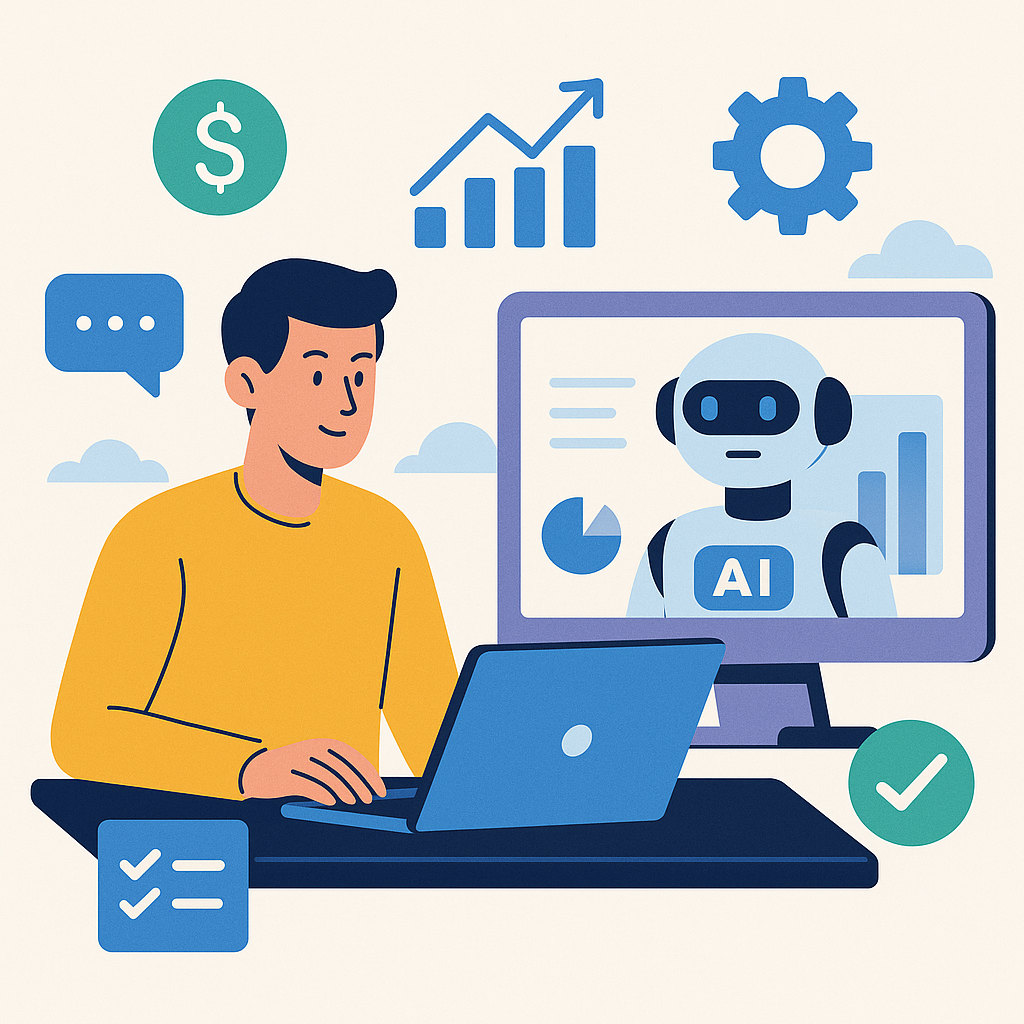
2. Scalability
AI can handle 10 clients or 10,000, instantly.
There’s no bottleneck between growth and capacity.
3. Decision Speed
AI analyzes data in real time. It doesn’t “think”, it acts.
That’s powerful when you’re competing in fast-moving industries.
Where Humans Still Win
But this experience also taught me something equally important:
AI can execute, but it can’t imagine.
AI doesn’t dream, empathize, or innovate in the way humans do.
It can mimic creativity, but it can’t feel purpose.
That’s why I still handle:
- Vision and strategy
- Brand tone and storytelling
- Client relationships
- Product development decisions
I don’t work in the business anymore; I work on the business.
And that’s the biggest mental shift AI gave me.
The Hidden Skill Nobody Talks About: AI Management
Running an AI-powered business isn’t about coding.
It’s about AI management, the art of designing workflows, prompts, and automation logic so your systems run like a real team.
Every AI “employee” needs:
- Clear goals (what it’s responsible for)
- Defined boundaries (what it shouldn’t touch)
- Regular feedback (data, performance, corrections)
Once I started treating my AI tools like digital team members, instead of random apps, the results skyrocketed.
The Psychology of Trusting Machines
At first, I didn’t trust my AI systems fully.
I’d double-check every message, review every automation, micromanage every output.
But the more I watched them work, the more I realized something uncomfortable:
They were more reliable than humans.
No forgotten follow-ups.
No miscommunication.
No ego or emotional burnout.
The hardest part wasn’t teaching AI, it was teaching myself to let go.
What Founders Can Learn from This
If you’re a startup founder or solopreneur, here’s my advice:
- Start with one system, not all.
Automate one role first, like marketing or support, and let it prove itself. - Think in roles, not tools.
Don’t say “I use ChatGPT.” Say “I have an AI copywriter.”
This mindset changes how you design processes. - Add human checkpoints.
Let AI do 90% of the work, but keep key reviews human-led. - Keep iterating.
Your first setup won’t be perfect, but AI learns fast, and so will you.
Running a business without employees isn’t about eliminating people.
It’s about freeing people to do higher-level thinking.
The Future: The Age of the AI-Run Business
In 2025, I believe we’re witnessing a new phase of entrepreneurship.
Just like the internet replaced offices, AI is replacing roles.
The next decade will be filled with businesses that look like this:
- 1 founder, 0 employees
- AI systems running daily ops
- Cloud-based, borderless scalability
These “AI-native companies” won’t just compete, they’ll dominate.
Not because they’re bigger, but because they’re smarter.
Conclusion: The Business That Thinks for Itself
So, can you really run a business without employees using AI in 2025?
The answer is:
Yes, if you’re willing to think differently.
It’s not about replacing humans with machines.
It’s about reimagining what a company is.
Your “employees” might not have names, faces, or schedules,
but they’ll work around the clock, learn endlessly, and never ask for a raise.
And when that happens, you’ll realize something I did:
The future of business isn’t built by people doing the work,
It’s built by people designing the systems that do the work.
Want to learn how to build your own AI-powered business system?
Read my book, Blueprint to Business Success, where I simplify automation and AI workflows into practical steps anyone can follow.
Related reading
More on building a business solo: