
Why the Next Great Entrepreneurs Won’t Have Teams, Just Systems
Introduction: The Moment I Realized “Teams” Were Becoming Optional
For years, I believed what every founder is taught:
“To grow, you need a team.”
Employees, managers, assistants, specialists, that was the “normal” way to build.
But in 2025, that rule finally collapsed for me. Not because I wanted it to…
but because AI systems performed better than my human team ever did.
I watched processes that once required 4–6 people run on their own with AI:
content creation, marketing, customer support, analytics, follow-ups, even strategy suggestions.
At first, it felt impossible.
But the more I replaced tasks with intelligent systems, the more I realized:
The next generation of world-class entrepreneurs won’t build companies with teams.
They will build companies with systems.
And I’m going to walk you through exactly why.
1. The Traditional “Team Model” Is Slowing Down Modern Founders
Let’s be honest: hiring comes with friction.
- Recruiting
- Training
- Managing
- Motivating
- Tracking performance
- Dealing with errors
- Handling interpersonal conflicts
I’ve dealt with all of this.
I lost weeks, even months, trying to “fix the team” instead of fixing the business.
But when I replaced repeatable tasks with AI, something changed.
Suddenly, there were no sick days, no delays, no confusion, no miscommunication.
Everything worked like clockwork.
And for the first time, I understood why the smartest founders in 2025 are saying:
“Don’t build a team. Build a system.”
2. Systems Don’t Get Tired, Confused, or Emotional — Humans Do
Humans are brilliant for creativity, leadership, intuition, and empathy.
But for repetitive tasks?
AI wins. Every single time.
When I automated operations, the difference was unreal:
AI Systems:
✔ Work 24/7
✔ Never forget tasks
✔ Never get distracted
✔ Improve continuously with data
✔ Cost 1/10th of an employee
✔ Run instantly at scale
Human Teams:
✘ Need breaks
✘ Make mistakes
✘ Require training
✘ Get stressed
✘ Struggle with high-volume tasks
The truth:
AI isn’t replacing humans, it’s replacing human inefficiency.
And that shift changes everything about entrepreneurship.
3. Entrepreneurs Used to Manage People, Now They Manage Intelligence
This is one of the biggest mindset shifts I experienced.
In the old model, founders were managers:
- Giving instructions
- Monitoring progress
- Correcting mistakes
- Organizing work
But in the AI-driven model, founders become designers:
- Designing workflows
- Linking automations
- Setting rules
- Reviewing data
- Steering the system
This frees founders to focus on what truly matters:
vision, creativity, strategy, product innovation, and relationships.
I stopped being a “boss.”
I became the architect of an automated machine.
And that machine now runs better than any team I’ve ever managed.

4. The Rise of Digital Employees, AI That Works Like a Team
By 2025, AI systems behave like actual employees:
They can:
- Analyze data
- Write content
- Respond to customers
- Create design assets
- Build funnels
- Launch campaigns
- Edit videos
- Summarize reports
- Automate invoicing
- Manage calendars
And they’re getting better every month.
What shocked me was how “team-like” the system became.
My AI tools started working together:
- The analytics system feeds insights to the content system.
- The content system creates drafts which the design system converts to visuals.
- The automation system publishes everything and updates my dashboard.
This wasn’t a collection of tools anymore.
It was a living digital workforce.
A force that didn’t need supervision, coffee breaks, motivation, or meetings.
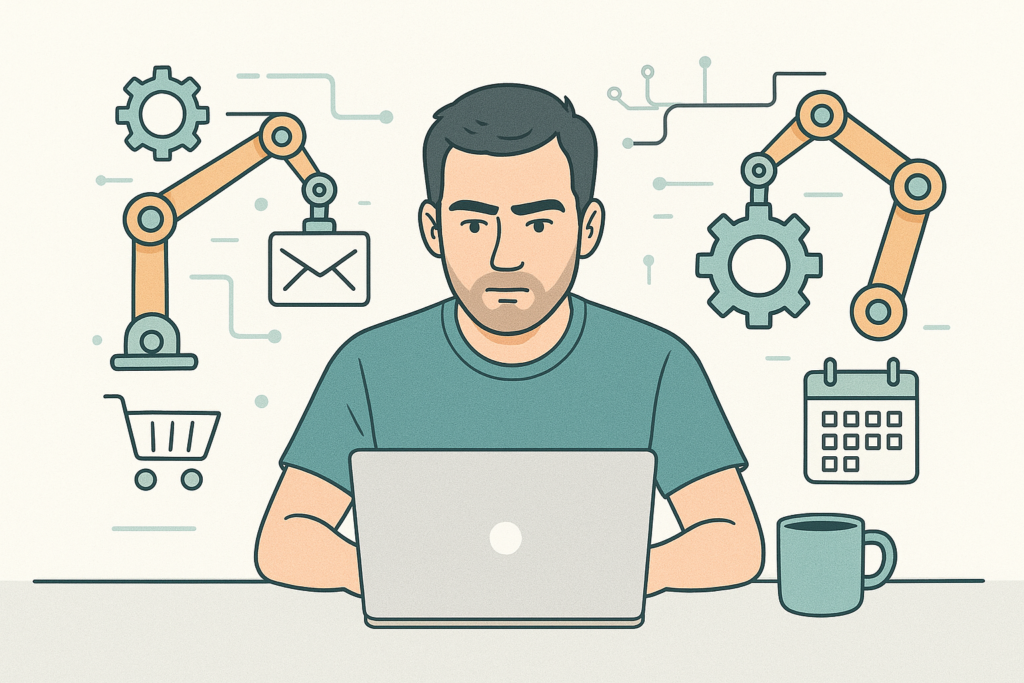
5. The Future Entrepreneur Is a One-Person Startup With a 50-Person System
Founders used to depend on headcount for growth.
Now?
You can grow with workflow count instead of employee count.
Let me explain:
Old Success Metric (pre-2025):
“Your company grew from 5 to 50 employees.”
New Success Metric (2025+):
“You built 50 automated systems that work together seamlessly.”
Which one is more scalable?
Which one is less stressful?
Which one costs less money?
Which one gives you freedom instead of trapping you?
Easy answer.
Today, a single founder with the right AI systems can outperform an entire traditional team.
This used to sound unrealistic.
It’s not anymore.
6. The Money Advantage: Systems Cost Less But Produce More
This is the part nobody wants to talk about… but everyone knows:
AI is cheaper than employees.
When I shifted to an AI-first business:
- My costs dropped 80%
- Productivity increased 5x
- Output became consistent
- Revenue jumped because I reinvested the time saved
Why hire a $1000/month assistant when an AI system can do more for $20–$40/month?
Entrepreneurs don’t talk about this publicly, but privately?
They know the truth.
Systems outperform teams, not emotionally, but economically.
7. The New Founder Skill: System Building, Not Team Building
If I could give one piece of advice to any entrepreneur entering 2025, here it is:
Master systems, not management.
You don’t need:
- HR policies
- Employee onboarding
- Performance reviews
- Weekly team meetings
You need:
- Automations
- AI workflows
- Smart dashboards
- Decision-making models
- Integrated systems
Once I learned this, my business went from:
❌ Chaos
❌ Overwhelm
❌ Burnout
❌ High cost
❌ Slow growth
To:
✔ Predictability
✔ Freedom
✔ Low expenses
✔ Scalable output
✔ Data-driven decisions
This didn’t happen because I became smarter.
It happened because the system became smarter.
8. But Here’s the Twist: Systems Don’t Replace Humans — They Free Them
This article may sound like it’s anti-human.
But it’s actually the opposite.
AI systems remove the repetitive, low-value, mentally draining work.
That leaves founders with the human side of business:
- Vision
- Leadership
- Empathy
- Creativity
- Storytelling
- Innovation
Humans become the mind.
Systems become the muscle.
This is the most powerful combination in entrepreneurship today.
9. My Prediction: By 2030, the Most Successful Companies Will Be System-Led
Let me say this clearly:
The entrepreneurs who master AI systems will dominate the next decade.
Not because they are smarter.
Not because they are richer.
But because they are leveraged.
A founder with:
- 50 automated workflows
- an AI-first approach
- zero dependency on human labor
- low overhead
- infinite scalability
…is nearly impossible to compete with.
That founder can grow faster, pivot faster, and operate with almost no friction.
This isn’t science fiction.
It’s happening right now.
Conclusion: The Future Belongs to System-Builders, Not Team-Builders
The next generation of legendary entrepreneurs won’t be the ones managing big teams.
They will be the ones who design big systems.
They will leverage:
- AI
- autonomous workflows
- automated decision-making
- digital employees
- intelligent operations
And this shift will redefine how companies are built, funded, scaled, and operated.
If you’re entering entrepreneurship in 2025, remember:
You don’t need 10 employees.
You need 10 powerful systems.
Systems don’t replace ambition; they amplify it.
And the founders who understand this early
will be the ones who shape the future of business.
Want to learn how to build a business powered by intelligent systems?
Read my book, Blueprint to Business Success, written in simple, practical language to help anyone start and scale with AI.
Related reading
More on building a business solo: