
What I Did When My Business Was Busy but Not Growing
Introduction: I Was Always Busy, and Still Stuck
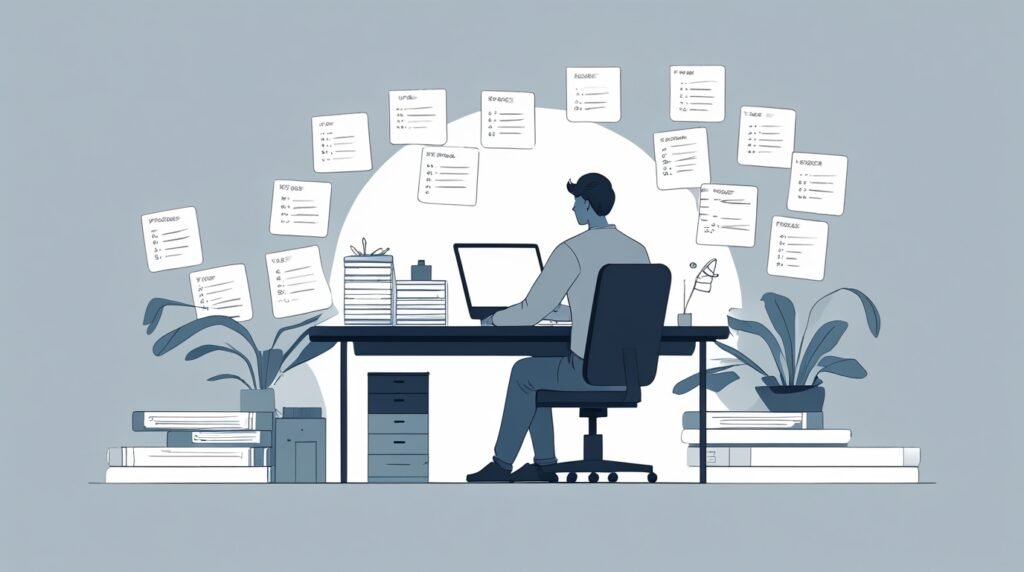
There was a phase where my days were completely packed.
I woke up with a long to-do list, jumped between tasks all day, and ended most evenings feeling exhausted. From the outside, it looked like I was “working hard.” But inside, something felt wrong.
Despite all the activity, my business wasn’t growing.
No clear momentum.
No predictable progress.
No sense of direction.
That contradiction, busy but not growing, is what pushed me to stop and rethink everything I was doing. This article is about that moment, what I discovered, and what I changed, honestly, from an early-stage perspective.
How I Realized “Busy” Wasn’t the Same as “Effective”
At first, I didn’t want to admit there was a problem. I told myself:
- “Growth takes time.”
- “Everyone struggles at the beginning.”
- “If I just work harder, it will click.”
But then I noticed a pattern:
I was doing a lot, but very little of it had a direct impact.
I tracked my week and realized something uncomfortable, most of my energy was going into tasks that felt productive but didn’t move the business forward.
That’s when I accepted a hard truth:
Activity was replacing clarity.
The Core Problem: I Had Work, Not a System
The biggest issue wasn’t effort. It was structure.
I didn’t have a system. I had:
- random tasks
- reactive decisions
- scattered priorities
- constant context switching
I was responding to what felt urgent instead of working on what actually mattered.
Once I named the problem, no system, I could finally start fixing it.
Step 1: I Stopped Doing Everything That “Felt” Important
This was uncomfortable.
I made a list of everything I was doing in a week and asked one brutal question for each task:
“If I stop doing this for 30 days, will my business actually suffer?”
The answer surprised me.
More than half the tasks didn’t really matter.
They made me feel busy.
They made me feel responsible.
But they didn’t contribute to growth.
So I paused them, without guilt.
This instantly created space to think.
Step 2: I Defined What “Growth” Actually Meant for Me
Another mistake I made was chasing a vague idea of growth.
I never defined what growth looked like at my stage.
So I simplified it.
For me, growth meant:
- clearer direction
- consistent output
- fewer distractions
- learning what worked and what didn’t
Once I defined this, my decisions became easier.
If a task didn’t support that version of growth, it didn’t belong in my workflow.

Step 3: I Identified the Few Actions That Actually Moved the Needle
After cutting noise, I noticed a pattern.
Almost all meaningful progress came from a small set of actions:
- creating value consistently
- sharing that value publicly
- improving based on feedback
Everything else was secondary.
So I rebuilt my days around these actions instead of random tasks.
This was the first time my effort felt aligned.
Step 4: I Stopped Multitasking and Started Sequencing Work
One reason I felt overwhelmed was constant switching.
I’d write for 10 minutes, then check messages, then tweak something, then research something else.
Nothing ever reached completion.
So I changed one rule:
One type of work per session.
No multitasking.
No jumping.
Just focused blocks.
This didn’t make me faster, it made me clearer.
Step 5: I Simplified My Goals Instead of Expanding Them
When my business wasn’t growing, my instinct was to add more:
- more ideas
- more channels
- more experiments
That made things worse.
So I did the opposite.
I chose fewer goals and committed to them longer.
Instead of chasing possibilities, I focused on consistency.
That’s when results started compounding.
Step 6: I Documented What I Was Doing (Even When It Felt Small)
I used to rely on memory.
Bad idea.
Once I started writing down:
- what I worked on
- why I worked on it
- what result it produced
patterns became obvious.
I could see what was working and what was just noise.
This documentation later became the foundation for better workflows and automation, but even before that, it gave me control.
Step 7: I Used AI to Reduce Busywork, Not Avoid Thinking
This is important.
I didn’t use AI to avoid decisions.
I used it to reduce friction.
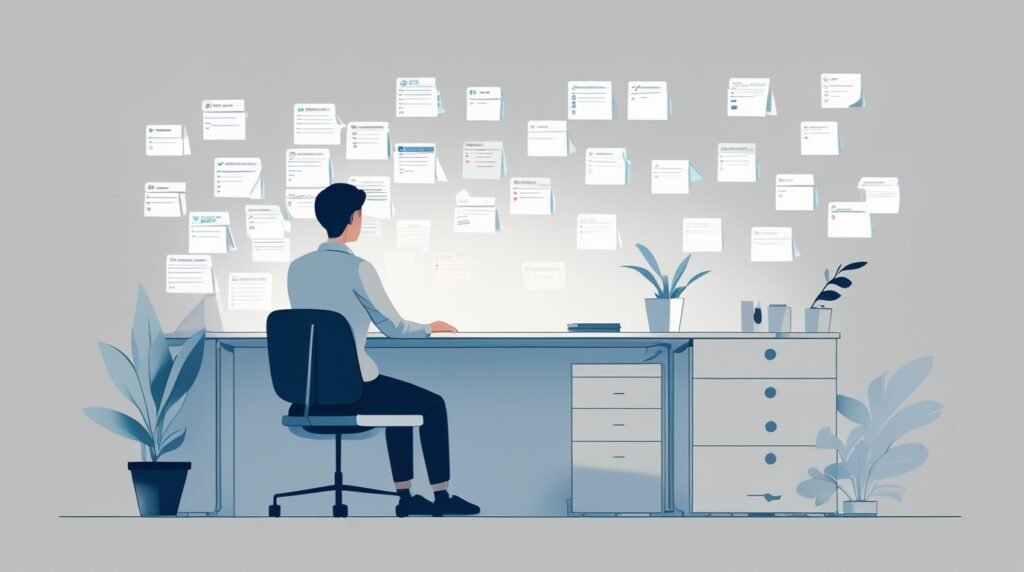
I let AI handle:
- drafts
- summaries
- organization
- repetitive writing
This freed my time for thinking, planning, and improving.
AI didn’t make my business grow by itself, but it gave me space to focus on what mattered.
What Changed After I Fixed the “Busy but Not Growing” Trap
The biggest change wasn’t revenue.
It was clarity.
- My days felt lighter
- My direction felt clearer
- My effort felt intentional
Growth became something I could understand, not just hope for.
And once clarity appeared, progress followed naturally.
Mistakes I Now Avoid
Looking back, here’s what I no longer do:
- work without a clear goal
- confuse effort with progress
- add complexity too early
- copy other people’s systems blindly
- chase every new idea
Avoiding these mistakes saved me more time than any productivity trick ever could.
Why This Phase Is Normal (And Not a Failure)
I used to think being busy but not growing meant I was failing.
Now I see it differently.
It’s a transition phase.
It happens when effort increases before direction matures.
The key isn’t working harder, it’s working with intention.
Who This Article Is For
This is for you if:
- you’re working hard but feel stuck
- your business feels noisy and unclear
- you’re early-stage and figuring things out
- you want progress without burnout
You don’t need a big business to fix this problem.
You just need clarity.
Conclusion: Growth Started When I Stopped Confusing Movement With Progress
My business didn’t start growing because I worked more.
It started growing when I:
- removed noise
- simplified focus
- built clarity
- and respected my energy
If your business feels busy but stuck, don’t panic.
Pause.
Simplify.
Build a system, even a small one.
That’s what worked for me.
If you want a simple, practical breakdown of how I think about building sustainable businesses, you can check out my book:
Blueprint to Business Success, written in clear language, is based on real learning and real mistakes.
Related reading
More honest lessons from the journey: