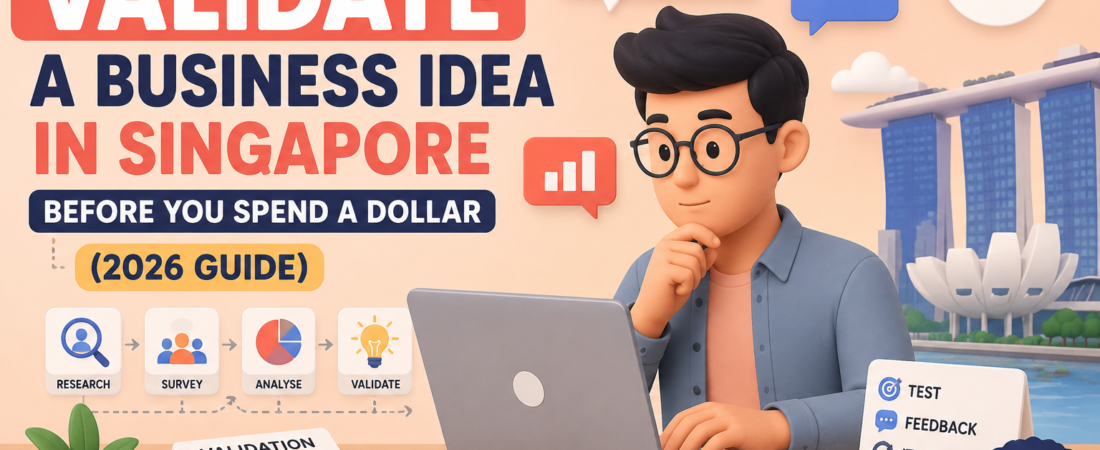
How to Validate a Business Idea in Singapore Before You Spend a Dollar (2026 Guide)
Every successful business starts with an idea, but not every idea becomes a successful business. One of the biggest mistakes aspiring entrepreneurs make is assuming that because they believe in their idea, other people will too. Unfortunately, the market doesn’t reward ideas, it rewards solutions to real problems.
In Singapore, where starting a business has become more accessible than ever, it’s tempting to jump straight into registering a company, building a website, or investing in marketing. While enthusiasm is important, spending money before validating your idea can quickly turn an exciting opportunity into an expensive lesson.
The good news is that validating a business idea doesn’t require a large budget. In fact, some of the most valuable insights come from conversations, research, and small experiments that cost little or nothing. Before you invest your savings or leave your full-time job, it’s worth taking the time to discover whether people genuinely need what you’re planning to offer.
Why Business Validation Matters
Validation is simply the process of confirming that your business idea solves a real problem for real people who are willing to pay for a solution. It helps remove assumptions and replace them with evidence.
Many entrepreneurs spend months creating products that nobody asked for. They focus on logos, branding, and websites before speaking to a single potential customer. By validating your idea first, you dramatically reduce the risk of building something the market doesn’t actually need.
Think of validation as your first investment, not in money, but in understanding your future customers.

Start With the Problem, Not the Product
The strongest businesses are built around problems rather than products. Instead of asking yourself what you want to sell, ask what challenge you want to solve.
For example, rather than thinking about creating another AI writing tool, consider why people use writing tools in the first place. Perhaps small business owners struggle to create consistent marketing content, or freelancers spend too much time drafting proposals. When you understand the problem deeply, creating a valuable solution becomes much easier.
A simple way to test this is by writing down the specific problem your business solves in one sentence. If that sentence feels vague, your idea probably needs more refinement before moving forward.
Research the Market Before Building Anything
Many first-time founders worry about competition, but competition is often a positive sign. It usually means there is already demand for the type of solution you’re considering.
Spend some time searching Google using the phrases your potential customers might type when looking for help. Visit competitor websites, read customer reviews, and pay attention to complaints. Negative reviews are especially valuable because they reveal gaps in the market that your business could potentially fill.
Online communities are another excellent source of information. Platforms like Reddit, LinkedIn groups, Facebook communities, and local Singapore business forums often contain honest discussions about the problems people face every day. Those conversations can provide ideas that no keyword research tool can.
Talk to Your Potential Customers
Nothing replaces real conversations.
Before creating a product or service, speak with people who match your target audience. The goal isn’t to convince them your idea is brilliant. Instead, it’s to understand their challenges and current habits.
Ask open-ended questions about how they solve the problem today, what frustrates them about existing solutions, and what an ideal solution would look like. These conversations often reveal insights you would never discover on your own.
Many successful startups began by talking to just ten or twenty potential customers before writing a single line of code or investing significant money.

Build a Simple Landing Page
You don’t need a complete website to test an idea.
A single landing page explaining your solution, who it’s for, and how it helps can tell you a great deal about market interest. Include a simple form where visitors can join a waiting list or request more information.
If people are willing to leave their email address, it’s a strong indication that your idea is solving a genuine problem. Even better, if someone asks whether they can buy your product before it’s finished, you’ve received one of the strongest validation signals possible.
Use AI to Speed Up Validation
Artificial intelligence has changed how entrepreneurs test business ideas.
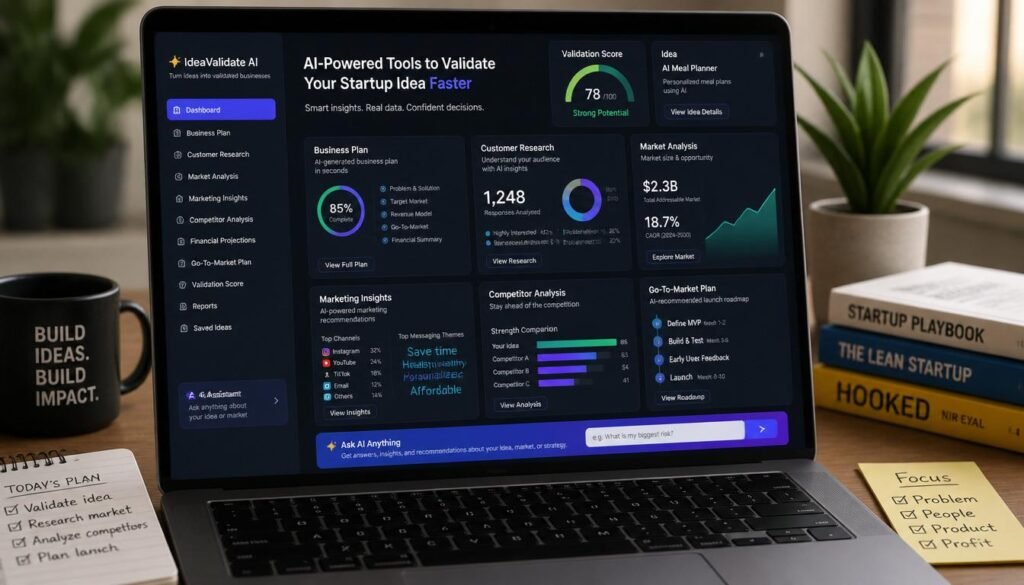
Instead of spending weeks researching markets or writing marketing materials, AI tools can help generate customer personas, analyse competitors, draft surveys, create landing page copy, and even organise customer feedback.
This doesn’t replace your own judgement, but it allows you to move much faster. Entrepreneurs who use AI effectively can validate ideas in days instead of weeks, giving them more time to improve their business based on real feedback.
If you’re planning to launch a digital business, you may also find our guide on How to Start a Small Business in Singapore Using AI helpful, where we explore practical ways AI can reduce startup costs and simplify daily operations.
Look for Your First Paying Customer
The best validation doesn’t come from likes, compliments, or positive comments.
It comes from someone willing to pay.
Even a single paying customer proves that your business creates value. That’s why many successful entrepreneurs focus on selling first and improving later. Instead of waiting until everything feels perfect, launch a simple version of your offer and learn directly from your customers.
Real feedback is always more valuable than assumptions.
Mistakes That Can Lead You in the Wrong Direction
Many entrepreneurs unintentionally validate the wrong things. Friends and family often provide encouraging feedback because they want to be supportive, not because they represent your target market.
Another common mistake is measuring social media engagement instead of buying intent. Thousands of likes might feel encouraging, but they don’t necessarily translate into customers. A small group of people willing to pay is far more valuable than a large audience that simply finds your idea interesting.
Validation is about commitment, not compliments.
When Should You Register Your Business?
Many new founders believe registering a business should be their first step, but that’s not always the best approach.
Unless your business requires immediate registration for legal or operational reasons, it often makes sense to validate demand before investing in formalities. Once you’ve confirmed that customers are willing to pay, you’ll have much greater confidence moving forward.
If you’re wondering how much you’ll need to budget for registration, software, and other startup expenses, read our guide on How Much Does It Cost to Start a Business in Singapore in 2026? It provides a detailed breakdown of the costs involved in launching a business locally.
And once you are ready to actually buy tools rather than just test ideas, it is worth knowing what the government will pay for. Our guide to the EDGE grant and funding AI tools in Singapore covers eligibility, timing and the mistake that disqualifies most applications.
Final Thoughts
Every successful business begins with an idea, but only ideas that solve genuine problems become sustainable companies.
Validation isn’t about proving yourself right. It’s about discovering the truth before investing significant time and money. The more you learn about your customers before launching, the stronger your business will be in the long run.
Today’s entrepreneurs have an advantage that didn’t exist a decade ago. Affordable technology, AI-powered tools, and digital platforms make it possible to test ideas quickly and at very little cost. Take advantage of those tools, listen carefully to your audience, and don’t be afraid to adjust your idea based on what you learn.
Starting a business in Singapore has never been more accessible, but the entrepreneurs who succeed are rarely the ones who move the fastest. They’re the ones who validate first, build second, and grow with confidence.
Related reading
Keep going with these Velzeno guides: