
How I Built a Simple Business System That Actually Works
Introduction: I Was Busy, But My Business Wasn’t Working
For a long time, I thought I was doing everything right.
I was working hard.
I was learning constantly.
I was trying new ideas every week.
But my business wasn’t growing in a predictable way.
Some days felt productive. Other days felt chaotic. Revenue was inconsistent. Tasks piled up. And worst of all, I couldn’t explain why things worked when they did.
That’s when I realized a painful truth:
I didn’t have a business system.
I just had a collection of tasks.
This article is about how I fixed that.
I’m not sharing theory. I’m sharing what I actually did, step by step, to build a simple business system that finally made my work clear, repeatable, and scalable.
What I Mean by a “Business System”
Before I go further, let me clarify something important.
A business system is not:
- complicated software
- endless processes
- corporate frameworks
- or fancy charts
A real business system is simply this:
A clear way to turn effort into results, consistently.
Once I understood that, everything changed.

Step 1: I Stopped Doing Random Work
This was the hardest part.
I used to start my day by asking:
- “What should I work on today?”
- “What feels urgent?”
- “What am I behind on?”
That approach kept me busy, but not effective.
So I changed one thing.
Instead of asking what to do, I asked:
“What directly moves my business forward?”
Then I removed everything else.
This alone eliminated about 40% of my daily work.
Step 2: I Identified the Only 4 Things My Business Needed
After observing my own work for weeks, I noticed something simple.
No matter the business type, everything I did fell into four categories:
- Creating value
- Getting attention
- Converting attention into income
- Improving what already worked
So I rebuilt my business around just these four areas.
If a task didn’t clearly fit one of them, it didn’t belong in my system.
This gave me instant clarity.
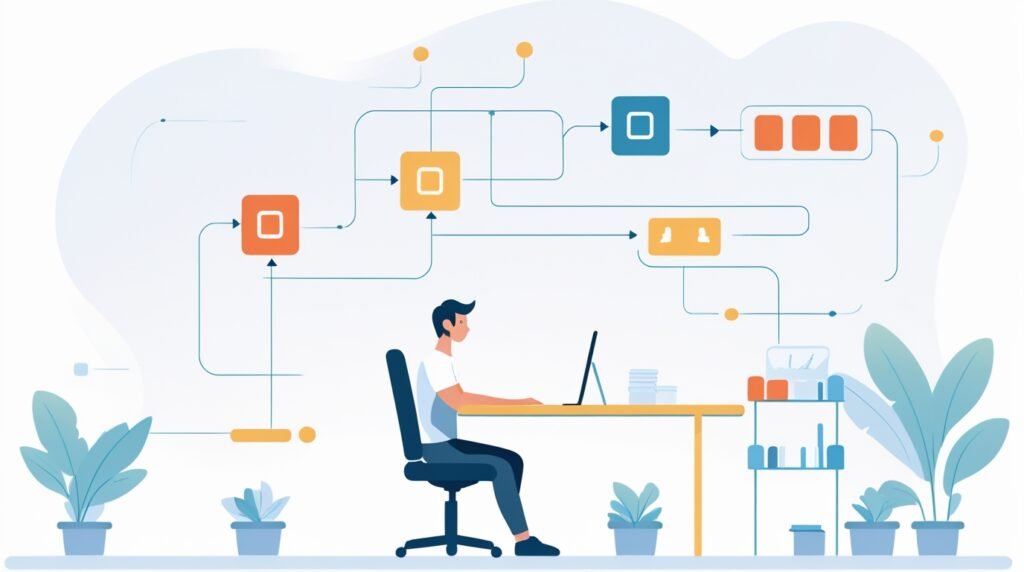
Step 3: I Designed My Workflow Around Energy, Not Time
This was a big mindset shift.
I used to schedule my work based on hours.
Now I design it based on energy levels.
Here’s what I did:
- High-energy time → thinking, planning, strategy
- Medium-energy time → execution, writing, building
- Low-energy time → review, automation, cleanup
My system works with me instead of fighting me.
As a result:
- I stopped procrastinating
- I made fewer mistakes
- I enjoyed my work more
Productivity improved without forcing discipline.
Step 4: I Documented Everything I Repeated
Any time I did something more than twice, I wrote it down.
Not in a fancy way.
Just simple notes like:
- how I start tasks
- what order I do things in
- what decisions I make
This created a personal playbook for my business.
Later, this documentation became the foundation for automation and delegation, but even before that, it reduced mental load massively.
I no longer had to “figure things out” every day.
Step 5: I Built My System Before Scaling Anything
This is where many people get it wrong.
They try to grow before they have clarity.
I did the opposite.
I focused on:
- making my process predictable
- understanding what worked
- removing unnecessary complexity
Only after my system worked at a small scale did I think about growth.
This saved me months of wasted effort.
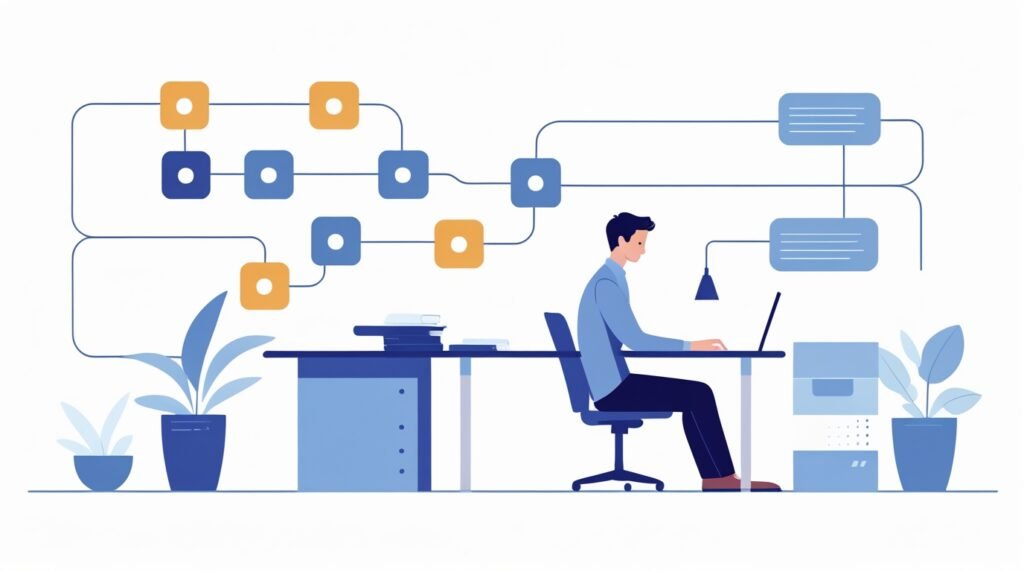
Step 6: I Used AI to Strengthen the System, Not Replace It
Important point:
I did not start with AI.
I built the system first.
Then I used AI to:
- speed it up
- reduce manual work
- improve consistency
Because the system was already clear, AI fit perfectly into it.
This is why my workflow didn’t break, it improved.
Step 7: I Measured Progress the Right Way
I stopped tracking everything.
Instead, I focused on just three questions:
- Is my work clearer than last month?
- Is my output more consistent?
- Is my stress level lower?
Surprisingly, revenue improved naturally once these were true.
What Finally Changed for Me
After building this system, something unexpected happened.
I stopped feeling anxious about work.
I stopped second-guessing decisions.
I stopped jumping from idea to idea.
My business felt calm.
Not because it was slow, but because it was organized.
That’s when I knew the system worked.
Common Mistakes I Avoided (After Learning the Hard Way)
Here are mistakes I no longer make:
- chasing too many ideas
- copying other people’s systems
- adding tools before clarity
- working long hours without structure
- scaling chaos
Avoiding these saved me more time than any productivity hack ever did.
Why Simplicity Is the Real Advantage
The biggest lesson I learned is this:
A simple system you use beats a complex system you admire.
Once my business became simple, it became flexible.
Once it became flexible, it became scalable.
And once it became scalable, growth felt natural instead of forced.
Who This System Is For
This approach worked for me because:
- I wanted clarity, not hype
- I wanted sustainability, not burnout
- I wanted progress, not noise
If that sounds like you, this method will help.
Conclusion: A Business That Makes Sense Is a Business That Grows
I didn’t build a perfect business.
I built a clear one.
And clarity turned out to be the most powerful advantage I could create.
If you’re overwhelmed, stuck, or unsure why your effort isn’t converting into results, don’t work harder.
Build a system that actually works.
That’s what changed everything for me.
📘 If you want a deeper, step-by-step breakdown of how I think about building sustainable businesses, you can check out my book:
Blueprint to Business Success, written in simple language, based on real experience and lessons learned from top entrepreneurs.