How AI Is Changing SaaS Pricing Models (Pay-As-You-Go Explained for 2026)
SaaS pricing is evolving rapidly.
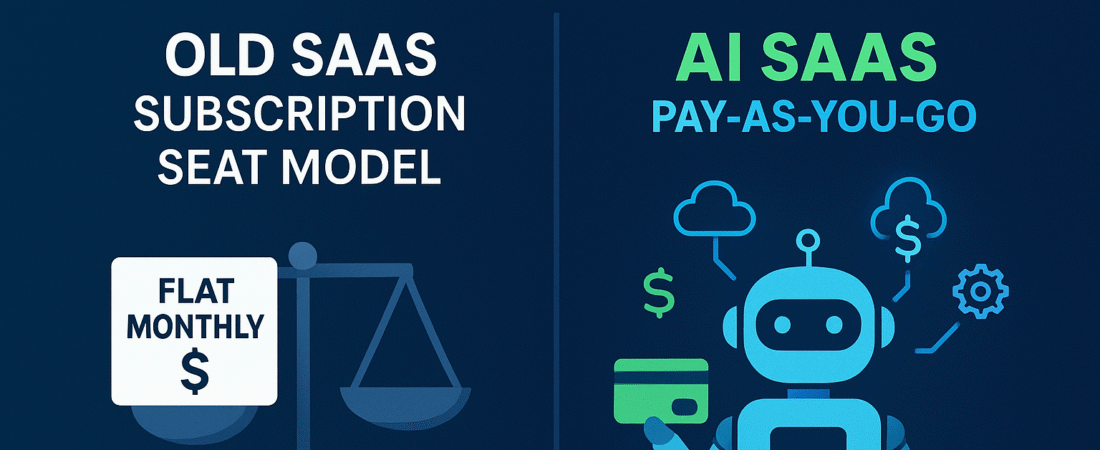
Traditional subscription models, where users pay a fixed monthly fee, are being replaced or supplemented by more flexible pricing structures.
One of the biggest drivers of this shift is artificial intelligence.
AI is enabling SaaS companies to move toward pay-as-you-go pricing models, where customers pay based on actual usage instead of fixed plans.
This shift is not just a trend. It is changing how businesses buy, use, and scale software.
In this article, we explain how AI is transforming SaaS pricing, why pay-as-you-go models are growing, and what it means for businesses.
What Is Pay-As-You-Go Pricing in SaaS?
Pay-as-you-go pricing means customers are charged based on how much they use a product.
Instead of paying a fixed monthly fee, users pay for:
- Number of API calls
- Amount of data processed
- Features used
- Time or usage volume
This model aligns cost with value.
Businesses only pay for what they actually use.
Why Traditional SaaS Pricing Is Changing
For years, SaaS companies relied on fixed pricing tiers.
Examples:
- Basic plan
- Pro plan
- Enterprise plan
While simple, this model has limitations.
Problems with Fixed Pricing
- Customers overpay for unused features
- Small businesses are priced out
- Scaling becomes expensive
- Usage and value are disconnected
AI is solving these inefficiencies.
How AI Enables Flexible Pricing
AI allows SaaS companies to track usage, predict demand, and dynamically adjust pricing.
1. Real-Time Usage Tracking
AI systems monitor how customers use a product in real time.
This enables accurate billing based on:
- Actions performed
- Data processed
- Time spent
2. Predictive Pricing Models
AI can analyze usage patterns and predict future demand.
This helps businesses:
- Forecast costs
- Optimize pricing
- Offer personalized plans
3. Resource Optimization
AI helps SaaS companies optimize infrastructure usage.
Lower operational costs allow them to offer more flexible pricing options.
Examples of Pay-As-You-Go SaaS Models
API-Based Pricing
Many AI tools charge per request or per token used.
This is common in:
- AI writing tools
- Image generation tools
- Data processing platforms
Usage-Based Pricing
Some platforms charge based on activity levels, such as:
- Number of users
- Tasks completed
- Automations executed
Hybrid Models
Many SaaS companies now combine:
- Base subscription
- Usage-based pricing
This offers both stability and flexibility.
Benefits of Pay-As-You-Go Pricing
1. Lower Entry Barrier
Small businesses can start using tools without committing to expensive plans.
2. Better Cost Control
You only pay for what you use, making expenses more predictable.
3. Scalable Growth
Costs increase gradually as your business grows.
4. Improved Efficiency
Businesses become more conscious of usage, reducing waste.
Challenges of AI-Driven Pricing
While flexible pricing offers advantages, it also introduces challenges.
1. Cost Uncertainty
Usage-based pricing can lead to unpredictable bills if not monitored carefully.
2. Complexity
Pricing structures can become harder to understand.
3. Over-Optimization
Businesses may limit usage to reduce costs, potentially affecting performance.
How Businesses Should Adapt
To benefit from AI-driven pricing models, businesses should:
Track Usage Regularly
Monitor how tools are used to avoid unexpected costs.
Choose Tools Based on Value
Focus on ROI rather than just price.
Combine Tools Strategically
Use multiple tools efficiently instead of relying on a single expensive platform.
The Future of SaaS Pricing
AI-driven pricing models will continue to evolve.
We can expect:
- More personalized pricing
- Dynamic billing systems
- Greater transparency
- Increased competition among SaaS providers
Businesses that understand these changes will be better positioned to control costs and scale efficiently.
Final Thoughts
AI is not just transforming how software works. It is changing how software is priced.
Pay-as-you-go models offer flexibility, efficiency, and scalability.
However, they also require better tracking and smarter decision-making.
The key is not just choosing the cheapest tool.
It is choosing the right pricing model for your business.
Related reading
More on where SaaS is heading: