
What I Did When I Felt Stuck With No Clear Business Direction
Introduction: When I Knew Something Was Wrong
There was a point when I couldn’t explain what my business was actually about.
I was doing things every day, working, learning, experimenting, but if someone asked me, “Where is this business going?” I wouldn’t have a clear answer.
That feeling was uncomfortable.
I wasn’t failing.
I wasn’t inactive.
But I was stuck.
Not stuck because I lacked ideas, but stuck because I lacked direction.
This article is about that phase, what it felt like, what mistakes I made, and what I did to slowly regain clarity without pretending I suddenly had everything figured out.
How I Realized I Was Directionless (Even Though I Was Busy)
At first, I ignored the feeling.
I told myself:
- “This is normal.”
- “Everyone figures it out along the way.”
- “I just need more time.”
But the feeling didn’t go away.
The signs were clear:
- I kept changing priorities.
- I jumped between ideas too often.
- I felt unsure whether today’s work even mattered.
- I was busy, but not confident.
That’s when I accepted the truth:
I wasn’t lacking effort.
I was lacking a clear direction.
The Core Problem: I Didn’t Know What I Was Building Toward
The biggest issue wasn’t strategy or tools.
It was this simple question I couldn’t answer:
“What am I trying to build right now?”
Without an answer, every task felt equally important, and equally pointless.
Once I saw that, I stopped blaming myself and started fixing the real issue.
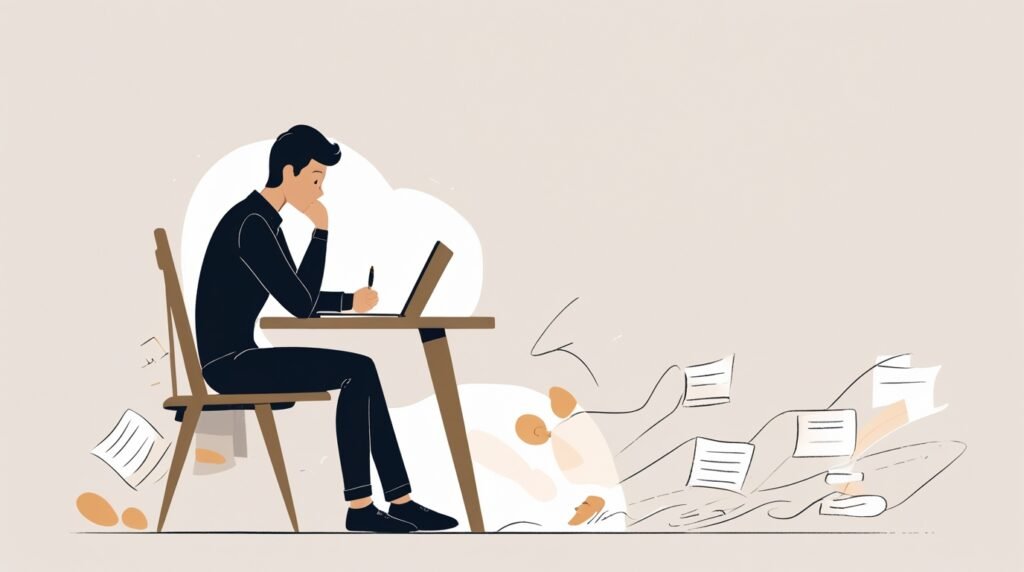
Step 1: I Stopped Searching for a Perfect Direction
One mistake I kept making was waiting for certainty.
I thought direction was something you discover, a clear path that suddenly appears.
That never happened.
So I changed my mindset:
Direction doesn’t come first.
Direction is shaped through movement.
I stopped waiting to feel confident and allowed myself to move forward imperfectly.
Step 2: I Defined Direction in a Very Short Time Frame
Thinking long-term made everything worse.
So I simplified my question.
Instead of asking:
“Where do I want this business to go in five years?”
I asked:
“What do I want to make progress on in the next 30 days?”
That change alone reduced a lot of pressure.
Direction stopped being overwhelming and became manageable.
Step 3: I Picked One Direction, Not the Best One, Just One
This was uncomfortable but necessary.
I accepted that:
- I couldn’t explore everything.
- I would probably make mistakes.
- I might change direction later.
But choosing something was better than staying stuck.
So I picked one focus and committed to it temporarily.
Not forever.
Just long enough to learn.

Step 4: I Removed Everything That Didn’t Support That Direction
Once I chose a direction, I became more strict with myself.
I paused:
- side ideas
- distractions
- unnecessary tweaks
- unrelated learning
This didn’t feel productive at first, but it made my days clearer.
Fewer options meant fewer doubts.
Step 5: I Used Writing to Understand My Own Thinking
When my direction felt unclear, I stopped trying to think my way out of it.
Instead, I wrote.
I wrote about:
- what confused me
- what felt heavy
- what I was avoiding
- what I actually wanted
Writing helped me see patterns I couldn’t see mentally.
It became my clarity tool.
Step 6: I Stopped Comparing My Direction to Others
This was a big one.
Looking at other businesses made me question my own path constantly.
I learned that:
Comparison doesn’t create clarity.
It creates doubt.
So I limited outside noise and focused on my own progress.
My direction didn’t need to look impressive, it needed to make sense to me.

Step 7: I Accepted That Direction Changes as You Learn
One thing that kept me stuck was the fear of choosing wrong.
Eventually, I realized:
Direction is not permanent.
It evolves with experience.
Once I allowed direction to be flexible, decision-making became easier.
I stopped overthinking and started learning through action.
What Changed After I Found Direction
The biggest change wasn’t results, it was confidence.
Even when progress was slow:
- I knew why I was working.
- I understood what mattered.
- I stopped second-guessing every decision.
Clarity gave my effort meaning.
And that made all the difference.
Mistakes I No Longer Make
Looking back, here’s what I stopped doing:
- waiting for perfect certainty
- changing direction every week
- chasing what others were doing
- overplanning instead of acting
- expecting clarity without effort
Avoiding these mistakes helped me move forward consistently.
Why Feeling Stuck Is Actually a Signal
I used to think feeling stuck meant I was failing.
Now I see it differently.
Feeling stuck often means:
- you care
- you’re thinking seriously
- you’re ready for structure
It’s not a dead end, it’s a transition.
Who This Is For
This article is for you if:
- you feel unsure where your business is going
- you’re early-stage and figuring things out
- you’re overwhelmed by options
- you want clarity without pressure
You don’t need a big business to find direction.
You just need to start small, and stay honest.
Conclusion: Direction Came From Commitment, Not Certainty
I didn’t find direction by waiting.
I found it by:
- choosing one path
- committing temporarily
- learning through action
- simplifying my focus
If you feel stuck right now, don’t panic.
Pick a direction that makes sense today.
Work on it long enough to learn something.
Adjust when needed.
That’s what worked for me, and it’s often enough to move forward.
If you want a simple, experience-based approach to building clarity in business, you can check out my book:
Blueprint to Business Success, written in simple language, is based on real learning and real mistakes.
Related reading
More honest lessons from the journey: